For land buyers & owners
Buy the dream lot, not the $100,000 surprise
The listing will not tell you whether you can actually build there. We check slope, wetlands, septic, zoning, flood risk and what utilities really cost to reach, verified by a real Land Consultant, before you sign anything.
The home inspection for land. The lookup is free, a SiteScore is $99 and comes back in 48 hours, credited toward a full report.
Trusted by builder teams and land professionals


A buyer we helped, three times
We’ve almost purchased property three different times now, and before moving forward, we had them do the due diligence for us. Every. Single. Time. they found something significant that we never would have known just by looking at the property. Issues that could have easily cost us an additional $70,000 to $100,000 after purchasing.
In an economy where you’re already paying more for less, the LAST thing you want to do is buy your dream piece of property and then discover you need another $100K just to make it usable. Needless to say, we walked away from all three properties and we are incredibly thankful we found out before we owned them instead of after. If you’re considering buying land, do yourself a favor and talk to them FIRST. Find out exactly what you’re getting into before you sign on that dotted line.
3 of 3
properties had a problem worth walking from
$70K–$100K
in surprise costs avoided, each time
The listing’s favorite sentence
Agent remarks
Beautiful parcel, end of the road, mountain views. Buyer to do their own due diligence.
One sentence, and the risk is yours
Nobody tells you how. Sure, you can call the city. But you have to know which office to call, what to ask them, and what their answer actually means for the house you want to build. Most of what goes wrong is not hidden from you. It is simply never mentioned, because no one in the transaction knows it is there.
You don’t know what to ask
The county answers the question you asked. It does not tell you the question you should have asked. “Is it zoned residential?” gets a yes, and that yes says nothing about the setbacks that leave you a 28-foot building envelope.
You don’t know what isn’t shown
Listing photos are taken in the dry season, from the good corner, on the flat part. No photo shows you a wetland boundary, a seasonal high water table, or where the buildable area actually stops.
Some of it, nobody has told anyone
The seller is not hiding it, they genuinely do not know. Neither does their agent. It lives in a federal wetlands inventory, a flood map amendment, or an access easement recorded in 1974 that nobody has read since.
The questions you would have to know to ask
This is the short list. Every one of them has ended a land deal, and none of them appear in a listing.
- Can a septic system actually be permitted here, and has a perc test ever been run on this soil?
- After setbacks, easements and any wetland buffer, where does the buildable area really start?
- Is the access a recorded legal easement, or a driveway everyone has simply always used?
- What will the utility charge to reach the building site, not just the property line?
- Is this parcel legal to build on, or a remnant that was never lawfully divided?
- Has the flood map changed since the last time this property sold?
We already know to ask them. We know which office holds each answer, which records to pull, and what the answer means once you have it. Then a SiteFacts Land Consultant checks the whole file before it reaches you, with every finding traced back to its source.
Buying a house
You would never skip the inspection.
A few hundred dollars, a few days, and someone qualified walks the place and tells you what you are actually buying. Nobody argues about it. It is just what you do.
Buying land
Nobody has ever offered you one.
So people wire six figures for dirt with less checking than they would do on a used car, and find out what they bought during permitting. The land is the part you cannot renovate later.
SiteFacts is the home inspection for land
Same idea, same moment in the deal, same reason. A qualified person examines what you are about to buy and hands you a written report on it, before your money is committed and while walking away still costs you nothing.
Buy and build with confidence
What we find
The land looks fine. That’s the whole problem.
Nothing on this list is visible from the road, and none of it shows up in the listing. Every one of them can cost more than the lot.
Wetlands you cannot see
Ground that looks like a meadow in August can be federally protected wetland on the map. Build there and you are into permits, mitigation, or a redesign.
Slope that eats the budget
A gentle-looking rise can mean retaining walls, a stepped foundation and truckloads of fill. The land is cheap; making it flat is not.
Utilities farther than they look
The power pole across the road may still be a six-figure run once easements and trenching are priced. Same for water, sewer and gas.
Zoning that says no
Setbacks, height limits, minimum lot size or a conditional use permit can rule out the exact home you pictured, on the exact spot you pictured it.
Septic and flood surprises
If the soil will not perc or the buildable acre sits in a flood zone, you are looking at an engineered system, higher insurance, or no build at all.
All five, checked by a person
A SiteFacts Land Consultant verifies every finding before it reaches you, so what you get is checked work rather than a database query.
Check your propertyThe cost of guessing
The same fact, “half this lot is wetland,” is free information before you offer and a catastrophe after you close. Timing is everything.
Without SiteFacts
- Find the septic won’t perc after you’ve closed
- Learn the “buildable acre” is mostly floodplain
- Pay six figures to reach a utility that looked close
- Own a lot you can’t build the home you planned on
With SiteFacts
- Know perc, slope, and flood risk before you offer
- See the true buildable area, not the lot-line acreage
- Get a real utility-cost estimate up front
- Negotiate the price down, or walk with zero regret
How it works
Three steps, and you know
Send us the address
Any address or parcel number in the country. No account, no obligation, nothing to install.
We screen it
A SiteScore comes back Go, Caution or Stop on the five deal-killers, researched and verified by a real Land Consultant. The $99 is credited toward a full report if you go deeper.
You decide
Serious about the lot? The full SiteFacts Report is complete due diligence you can hand your builder, your lender, or the seller during negotiation.
Already working with a builder? Send them here →
The report
What’s inside a SiteFacts Report
Zoning, setbacks & legal compliance
What the land is allowed to become: overlays, setbacks, deed restrictions, and use limits, checked against the jurisdiction’s own code, not a generic zoning lookup.
Environmental & wildlife considerations
Wetlands, floodplains, protected habitat, and the wildland-urban interface.
Utilities & infrastructure availability
Real distance to water, sewer, power, and internet, and what to budget for the runs. Proximity is not access.
Risk factors & development costs
Slope across the building envelope, soils, access, and the site-work budget those constraints imply.
Expert analysis, with the receipts
A plain-English verdict on what to do next, and a citation trail behind every regulatory claim, so it holds up with your customer, your PM, and the permit counter.
Case study
“City water and sewer nearby”
Perfect location. Dream property secured. Or so they thought.
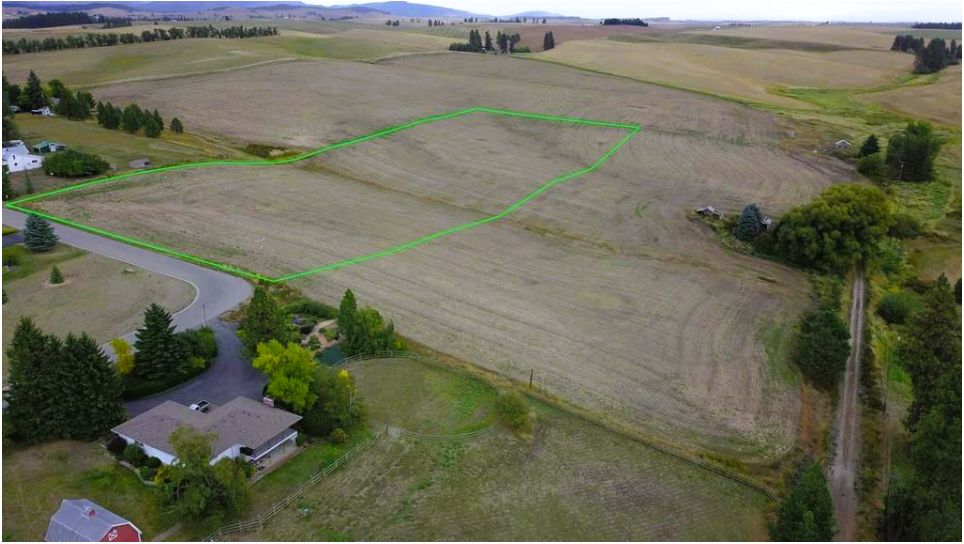
A client fell head over heels for 3.5 acres in a charming Eastern Washington farming town. The listing checked every box: within city limits, reasonable slope, beautiful community setting. And that magical phrase every buyer loves to see, “city water and sewer nearby.”
But “nearby” made my radar ping.
I advised them to pump the brakes before making an offer. Time for some detective work. The county and city GIS systems came up empty for this small town’s infrastructure, so I went straight to the source and emailed Public Works for their utility maps. While waiting, I ran the full SiteFacts analysis. Everything pointed to a green light.
Then Public Works responded.
This property was a recent minor partition that slipped through the cracks of planning review. Water main? Right there in the street, no problem. The sewer is where dreams meet reality. The minor partition process had dodged the thorough utility extension requirements that major subdivisions face, a regulatory gap that left future homeowners holding the infrastructure bill.
What the analysis cleared
- Wetlands check came back clean
- No FEMA flood concerns
- Soils solid for residential construction
- Six percent slope, manageable
- Critical areas cleared, no red flags
Everything pointed to a green light.
What one email to Public Works found
- Sewer main 300 feet away, under city streets
- Main extension required to reach the property
- Two manholes to install
- A lift station, because of the elevation difference
- No exceptions in city code, and no alternative
Connect to city sewer, or don’t build.
Because we caught this before their offer, my client had leverage. They could negotiate with the seller to handle the extension, adjust their offer to account for the infrastructure costs, or find middle ground. Without this deep dive, they would have discovered the surprise during the construction contract process or later. I have watched too many families hit this wall after closing, when backing out is not an option and dreams turn into financial nightmares.
“Nearby” and “available” are not the same thing.
Every lot has secrets hiding in jurisdiction files and maps. The time to uncover them is before you sign, not after.
Don Healy · founder, SiteFacts
FAQ
Land buyer questions
I’m only buying one property. Is this really worth it?
When should I order, before or after I make an offer?
Can I use the report to negotiate?
Can I share it with my builder or lender?
Is a person actually looking at this, or is it automated?
Do you cover my area?
How long does it take?
Buy and build with confidence
Type the address and we’ll take it from there. A SiteScore is $99 and comes back in 48 hours, credited toward a full report if you go deeper.