Oregon's Wildfire Map Is Gone. Here's What Decides Your Building Rules Now.
Oregon's wildfire map was repealed. R327 building standards now apply only where your city or county adopted them. Where they do, they can add $20,000 or more.
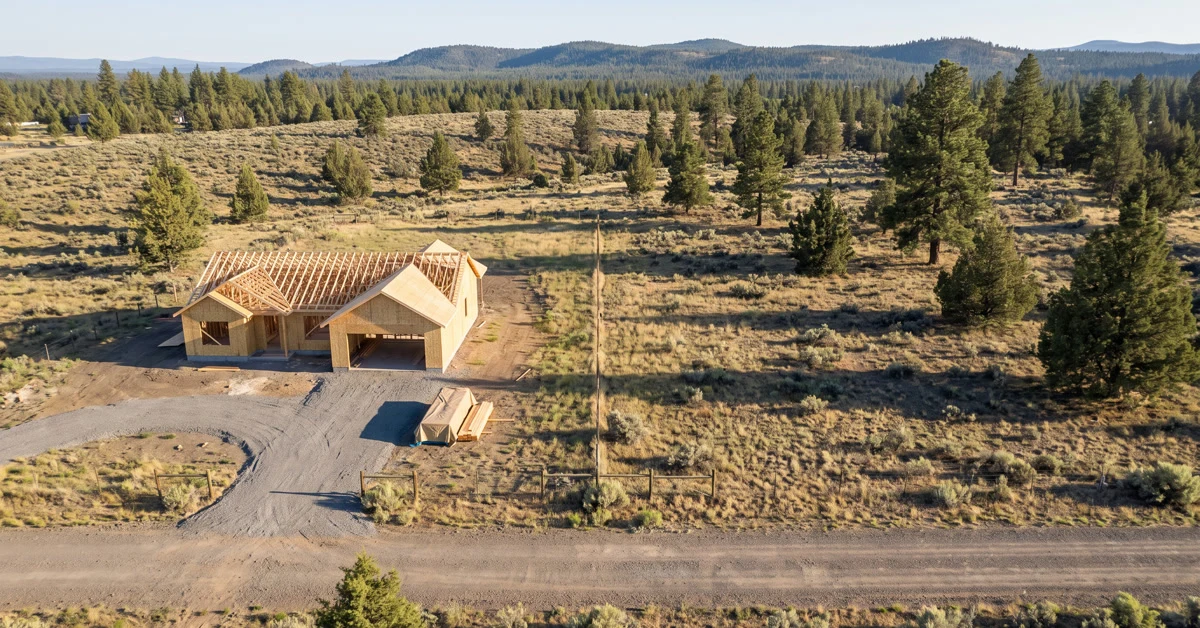
Oregon repealed its statewide wildfire hazard map in 2025, and the map people search for as the Oregon wildfire map no longer sets building rules.
Senate Bill 83 repealed the map. Wildfire construction standards, Section R327 of the Oregon Residential Specialty Code, now apply only where a city or county with a building inspection program has adopted them, in the area it sets. Where they apply, fire hardening can add $20,000 or more to the house.
What happened to Oregon’s wildfire map?
Senate Bill 83 repealed the state law that created the statewide wildfire hazard map, along with the rules that depended on it.
The Oregon Department of Forestry’s January 2026 report to the Board of Forestry says it plainly: the bill “repealed ORS 477.490 that established the Statewide wildfire hazard map and rules relating to it.”
So the map you may have bookmarked is not what sets construction requirements for a new house anymore. Something else does.
Who decides now whether R327 applies?
The city or county that runs the building inspection program decides, and only if it has formally adopted R327.
The Oregon Building Codes Division put R327 into the 2023 Oregon Residential Specialty Code, and its guidance on local adoption is direct: the standards are “only applicable where adopted by the local municipality,” and R327 “must be formally adopted by a local municipality for it to be enforced.”
Only a municipality that runs a building inspection program can adopt it. If a city has no program but the county does, the state guidance says the question is potentially decided at the county level.
The municipality also draws the line. It can use a map or a written description, and it doesn’t have to be the whole city or county.
The Building Codes Division keeps a list of the municipalities that have adopted. It currently names Ashland, Bend, Deschutes County, Grants Pass and Sisters. Check the current list before you rely on this one.
What does that look like in Central Oregon?
Two jurisdictions there show how it plays out, and the dates matter.
Deschutes County adopted Ordinance 2026-002 on January 28, 2026, adding DCC 15.04.010(A)(1). According to a county memo to the Board of Commissioners, the standards took effect April 1, 2026. The county’s R327 page says they are mandatory on all new dwellings and all new accessory structures, across all of unincorporated Deschutes County and within the city limits of Sisters. R327.1.3, which the ordinance adopts whole, exempts three kinds of accessory structure: nonhabitable detached buildings of 400 square feet or less that sit at least 50 feet from any habitable structure on the lot, agricultural structures exempt under ORS 455.315, and detached membrane covered frame structures. R327 does not cover partial repairs, remodels, additions, or manufactured homes built to the federal HUD standard.
The City of Bend adopted its own ordinance on April 15, 2026. According to the City of Bend’s announcement, the requirements take effect May 15, 2026 for permit applications filed on or after that date, and they apply to newly constructed dwellings and accessory structures, not to additions or renovations of existing buildings.
That is one region’s answer. Your county may not have adopted anything, and the county next door may have drawn a different line. In Bend, ask the city where inside its limits the standards apply.
What does R327 cover, and what doesn’t it?
R327 covers new construction of new buildings under the Oregon Residential Specialty Code. It doesn’t reach the house that’s already standing.
That means no re-roofing or re-siding an existing house, and no addition to a house built before adoption. Manufactured homes aren’t covered either. The state guidance says a newly built detached ADU on a parcel subject to R327 is covered, while an attached ADU added to an existing house as an addition is not.
Some new accessory structures are covered too. Under the state guidance, habitable ones of any size can be, nonhabitable ones over 400 square feet can be, and so can nonhabitable ones of any size within 50 feet of a habitable structure on the lot.
For smaller buildings, the sources don’t line up. The state guidance and the Deschutes ordinance both leave out nonhabitable accessory buildings of 400 square feet or less that sit 50 feet or more from a habitable structure. The county’s own web page words it differently, as a roof height of 15 feet or less. If you’re thinking about a shop or a detached garage, confirm it with the local building department before you assume it is in or out. In Deschutes County, that is Building Safety at 541-385-1743.
One more detail that matters after a fire. The state guidance says a house that existed before adoption and was destroyed by fire or another disaster may be rebuilt as it existed.
What can R327 add to the cost of a house?
Where R327 applies, the fire hardening requirements can add $20,000 or more to the house.
It is not a statewide average and it is not a quote for your plan. Fire hardening, sometimes called home hardening, is the building side of the problem: how the house itself is built.
What matters most is when you learn it. Finding out before you price the plan or sign the contract is a different conversation than finding out at permit.
Isn’t defensible space the same thing?
No. Defensible space is about the ground around the house, and R327 is about the house.
The Oregon State Fire Marshal adopted a defensible space model code in 2026, effective April 29. Adoption by local governments is voluntary. The model code text calls for a noncombustible zone of at least 5 feet around buildings, plus fuel modification 30, 50 or 100 feet out depending on the hazard level. It covers vegetation and fuel. It says nothing about how the house is built.
So a lot can face one, both or neither, depending on what the local government adopted.
Is this only an Oregon thing?
No, and I’m starting to see wildfire construction codes like this show up in more states, and they don’t all handle it the same way.
California’s State Fire Marshal classifies Fire Hazard Severity Zones, and with limited exceptions the same wildfire building construction and defensible space regulations apply across State Responsibility Areas and any of those designated zones.
Colorado went another way. Under SB23-166, a state board sets minimum codes and standards, and a governing body in a wildland urban interface area has to adopt and enforce a code that meets or exceeds them.
Oregon leaves it to each city or county to adopt R327 and draw the line.
Same idea, three different answers to “does this apply to my lot?” You don’t find that in a national dataset. The answer sits in the local code and in how the local government drew the area.
If you’re building for a customer who already owns the lot
The same house plan can carry different wildfire requirements on two customer lots, and the price can follow.
When a customer brings you a lot, the plan price shouldn’t assume the answer. One plan can land under several building departments in a single month, and each may have adopted R327 or not, and each may have set a different area.
Before you price it, ask the local building department: is this parcel inside an area where R327 applies? Then price the plan for that lot, not for the last one.
What to do before you buy or price
Find the building department that would issue the permit for the parcel. Ask whether it has adopted R327 and whether the parcel sits inside the area it set. Ask the same about defensible space. Then get the answer before money moves.
A SiteFacts Report covers wildfire: whether a parcel sits in a wildland urban interface area and/or a local R327 area, what that triggers, and fire marshal review. You see whether the parcel sits in one of those areas, and what that triggers, before you commit, and your builder sees it before the plan is priced.
Know what applies to the lot before you commit
The SiteFacts Report checks whether a parcel is in a wildland urban interface area and/or a local R327 area, what that triggers, and fire marshal review.
Related reading
 Fire Safety
Building Near Nature? Understanding Wildland Urban Interface Requirements
A home with nature as your neighbor comes with a rulebook most buyers never see until permitting. Here's what a WUI designation actually costs.
Read Fire Safety
Fire Truck Access Requirements for Residential Property
The driveway is the part of a build most people treat as an afterthought. The fire marshal treats it as a permit condition, and it can cost six figures to fix late.
Read Due Diligence
Running 170 to 200 On-Your-Lot Homes a Year Showed Me Where Land Due Diligence Breaks
Who ends up checking the customer's lot as an on-your-lot builder grows, what that cost us, and what changed when I did it before the contract.
Read