Why Expansive Soils Matter When Buying Land
The lot looks perfect. The problem is what's under it: clay soils that swell, shrink, and quietly crack foundations long after closing.
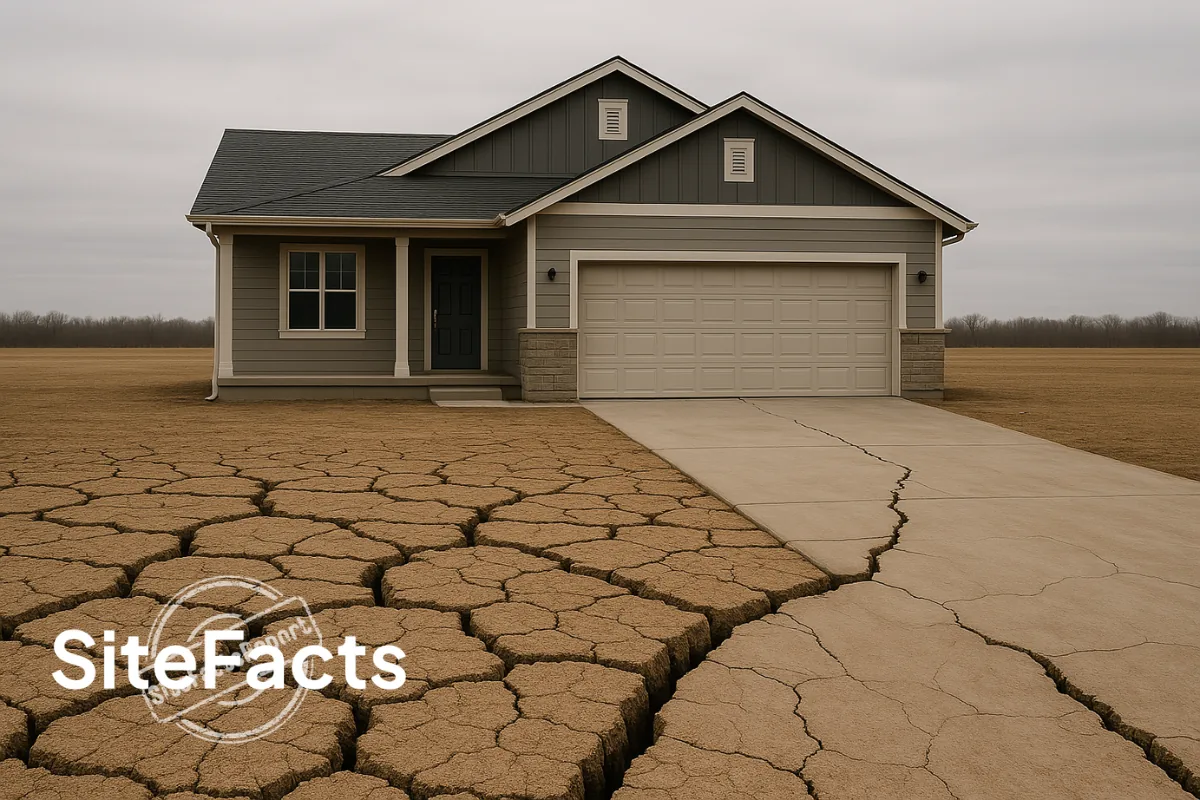
That flat, dry lot can still be a bad place to build. Beneath the surface might be expansive clay soil, a hazard that swells, shifts, and does tens of thousands of dollars in damage before anyone notices.
What expansive soils do
Expansive soils are rich in clay minerals like montmorillonite that absorb water and swell, then shrink dramatically as they dry. That constant volume change exerts uplift pressure on whatever sits on top, and over a few wet-dry cycles it produces slab and foundation cracks, uneven floors, sticking doors, and driveway upheaval. The damage is slow, so it usually surfaces long after the keys change hands.
How to check before you buy
Two public tools flag the risk before you’re committed:
- County GIS systems often carry geohazard or soil-hazard layers that mark known or suspected expansive soils.
- The NRCS Web Soil Survey lets you look up a parcel and read its shrink-swell rating. A value over 0.5 is the red flag. Watch for classifications like Carney clay, Vertisols, or any clay-rich group.
In Southern Oregon, Medford, Central Point, and parts of Polk County are known for expansive clay conditions.
When a geotechnical study is required
If a parcel is flagged, the building department may require a geotechnical (soils) study before construction. It tests subsurface conditions, confirms shrink-swell potential, and recommends mitigation such as over-excavation or structural fill. In Jackson County this isn’t discretionary: parcels flagged for expansive soils in the Oregon HazVu statewide geohazards viewer trigger the requirement automatically, based on the county’s hazard classification, not on what an applicant chooses to disclose.
Red flags on the ground
Cracked soil during a dry season, neighboring homes with foundation repairs or heaving driveways, a GIS layer reading “expansive” or “unstable soils,” or a jurisdiction that already requires geotech in the zone. Any one is reason to dig deeper before you write an offer.
Know what's under your feet
Order a SiteScore to see soil, slope, and geohazard flags on any parcel before you commit.