The Hidden Cost of Hydric Soils: A Builder's Guide to Oregon's Wetland Regulations
A lot can look bone dry in August and still be a mapped wetland. Here's how hydric soils quietly add a month and thousands of dollars to an Oregon build.
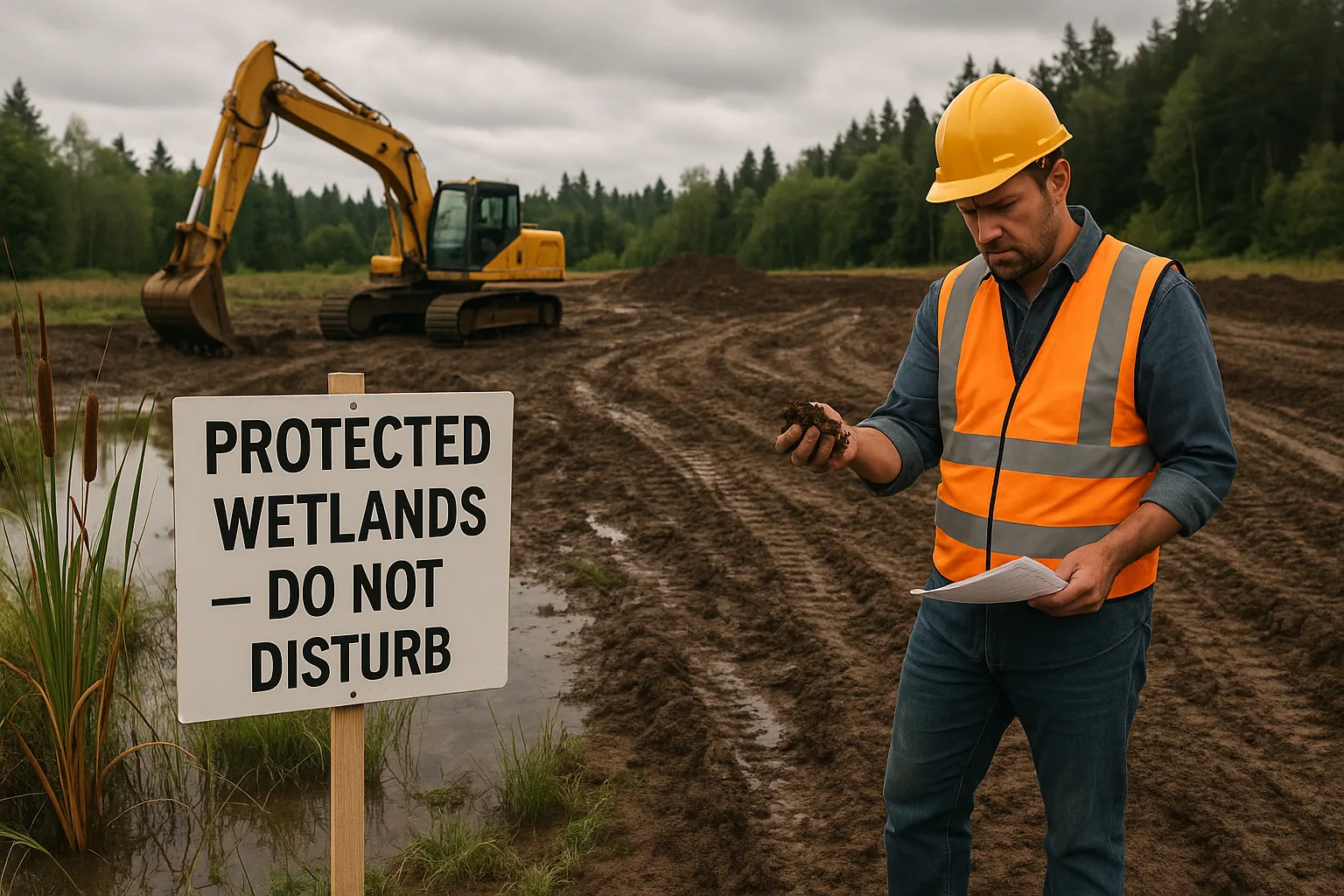
A lot can look bone dry, cleared, and identical to the ones next to it, and still be a legally mapped wetland. In Oregon, that single fact can add a month to your permit timeline and thousands to your budget before you move a yard of dirt.
What hydric soils actually signal
Hydric soils are saturated, flooded, or ponded long enough during the growing season to create oxygen-depleted conditions near the surface. The key word is seasonally: a lot can look dry and buildable in August yet still be mapped as hydric because of what happens during Oregon’s wet winter. Oregon’s Statewide Wetlands Inventory maps these areas as “presumed wetlands,” and that mapping, not standing water you can see, is what triggers the rules.
The ORS 215.418 trigger
When a parcel falls inside a mapped hydric-soil area, any building or land-use application must be forwarded to the Department of State Lands (DSL) within five days of submission. It’s mandatory. Lane County cannot issue permits until DSL does one of three things: confirms no jurisdictional wetland exists, states that no removal-fill permit is needed, or lets 30 days pass without objection. That review window alone adds a minimum of a month before standard review even begins.
Where the costs come from
Oregon’s removal-fill law requires a state permit to move more than 50 cubic yards of material in a jurisdictional wetland, and a routine foundation excavation and grading plan blows past that threshold easily.
The lesson for builders
Never assume lot similarity. Even inside one subdivision, individual parcels carry their own regulatory story, and the DSL referral fires off the mapping, not off anything an applicant discloses. Factor the 30-day review into every schedule from the start, and price the site before the contract, not after.
Learn each lot's story before you break ground
A SiteFacts review flags hydric soils and DSL referral triggers before they become a mid-project surprise.