It Looked Like an Easy ADU. It Wasn't.
A City of Bend case study in what actually ends ADU projects: not zoning, but the infrastructure nobody checked before purchase. Chapter 15.10 gives you two options, and sometimes neither works.
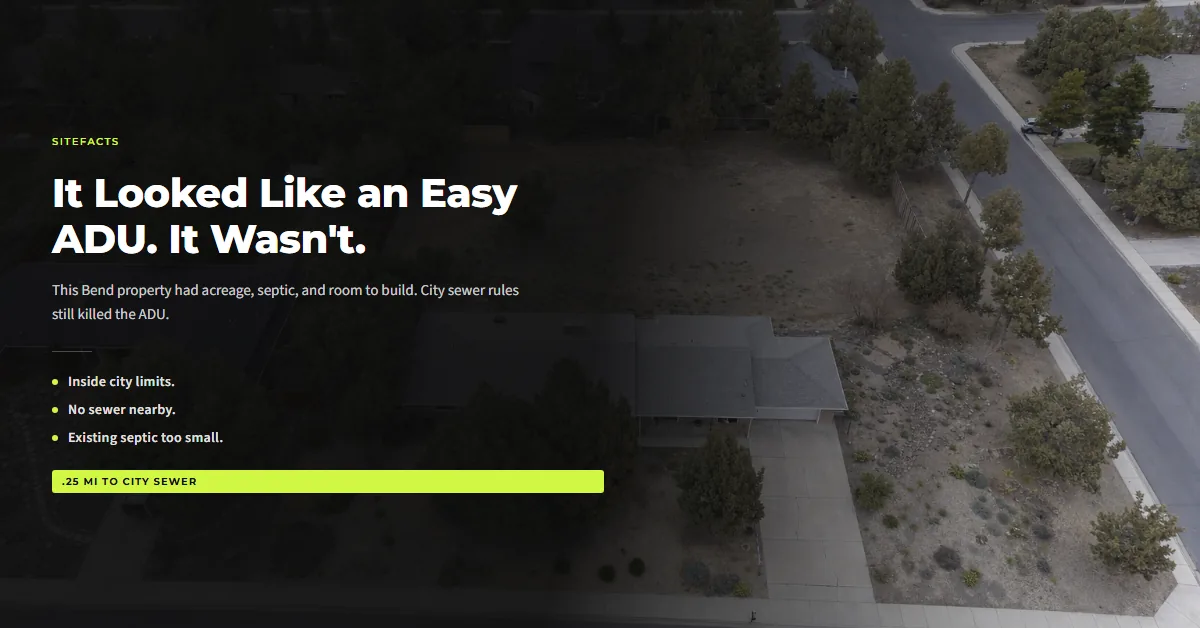
A family owned three and a half acres inside City of Bend: existing home, existing septic, mountain views, and room to add. Plans were drawn for an 800-square-foot, one-bedroom ADU, and on paper it looked straightforward. A pre-purchase check ended the project before another dollar moved.
Two options, no third
City of Bend Code Chapter 15.10 gives an ADU exactly two paths: connect to the existing on-site septic if that system can carry the added load, or connect to city sewer. That’s it. No new separate septic system, no variance process, no engineering workaround. Here, the existing septic couldn’t support a second dwelling, and the nearest city sewer connection was more than a quarter mile away.
The ADU was abandoned. The owners built a shop instead.
City limits, not curb appeal
The boundary that governs sewer isn’t the property line or the lot size. It’s the jurisdictional boundary. A large, rural-feeling parcel inside city limits answers to city code, not Deschutes County, even when everything around it runs on septic. Extensions in the Bend area run from roughly $40,000 for short runs to over $150,000 past a quarter mile, costs no ADU rental income can justify.
The land-division workaround doesn’t work
Partitioning to create a new flag lot doesn’t escape Chapter 15.10. Bend Engineering confirmed the split itself triggers the sewer-connection requirement before any vacant-lot exemption applies. The new parcel is still inside city limits, still subject to the same code.
The lesson beyond the sewer
Oregon’s 2019 ADU reforms made accessory units easier to permit, but state policy doesn’t override local infrastructure, and infrastructure is where projects die. Somewhere else the deal-killer is solar setbacks, parking minimums, ADU sizing caps, or a permit trigger nobody noticed. Zoning tells you what might be allowed; the site, the utilities, and the local code together decide whether it actually is. Confirm jurisdiction, sewer status, septic capacity, and utility distance before you buy or draw plans. Those answers exist before you own the land, and finding out early costs a fraction of finding out after.
Check the infrastructure, not just the zoning
A SiteFacts feasibility check confirms jurisdiction, sewer service, and septic capacity before the design budget is spent, in days, not months.