What a Dead Permit File Revealed for an ADU Investment
A commercially zoned lot with an old residence can carry grandfathered residential rights, and an abandoned permit file can hand you sewer, power, and parking answers before you ever call a builder.
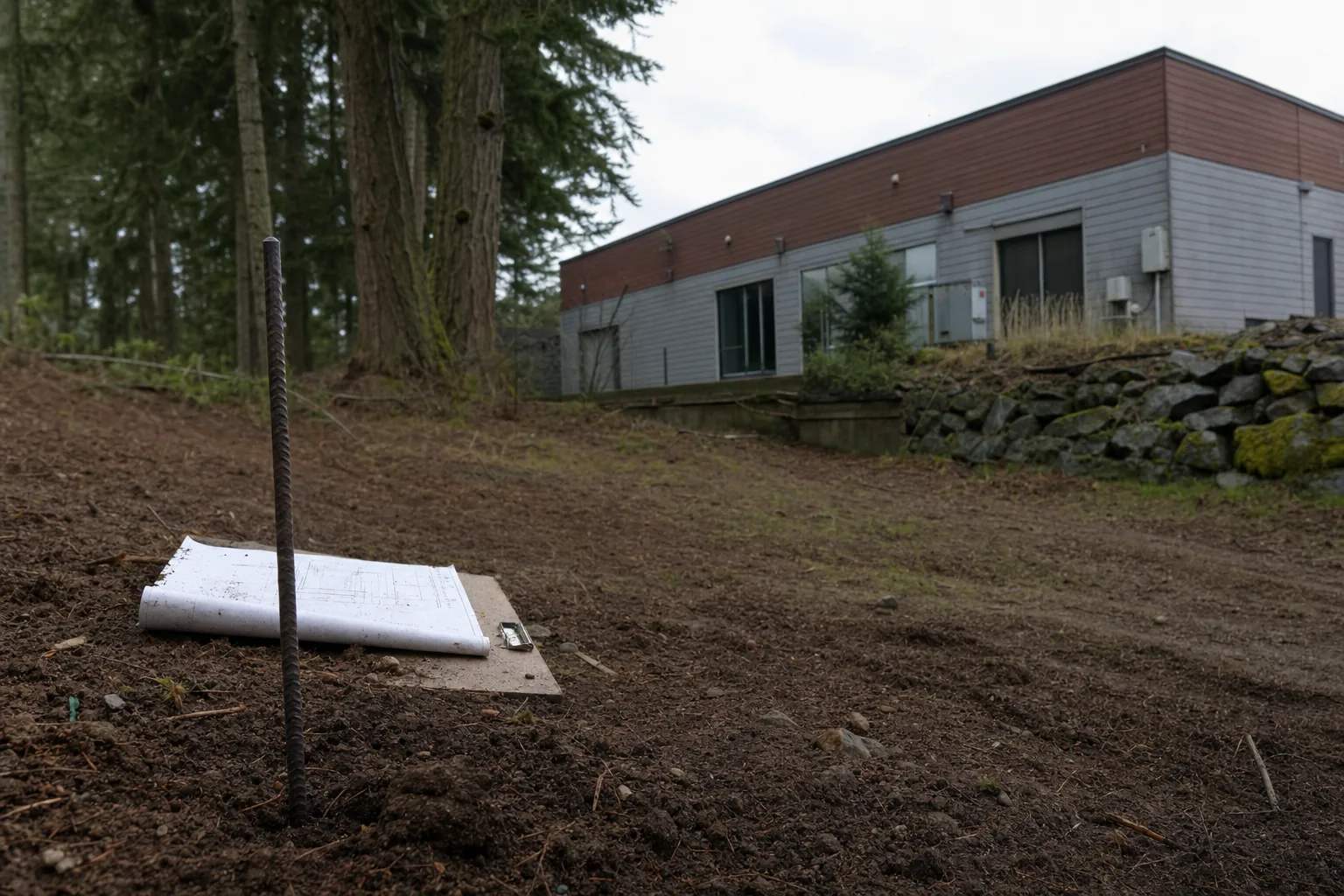
Two investors bought a property to build an ADU. Before they called a single builder, they ordered a SiteFacts due diligence report, and it found an abandoned permit application from a prior investor, sitting unread in a records office with answers to questions they didn’t yet know to ask.
The dual-zone condition nobody mentioned
The lot was commercially zoned. Most investors see that on a property sheet and either pass or burn weeks trying to decode what it means for a residential project. What the permit history revealed: a residence had been established here before the current zoning took effect, creating a grandfathered nonconforming use. The parcel legally retains residential construction rights under the commercial designation.
Four answers from one dead file
A prior investor had filed for a duplex that never got built. That cold application still documented:
- Power undergrounding. The requirement was on record, so the electrician’s scope is known before rough-in, not discovered during it.
- Sewer lateral. Confirmed and sized, not just “there’s a connection nearby.” A builder can design to spec.
- Parking compliance. Permitted and completed by the prior investor. Already crossed off the checklist.
- Setbacks. The commercial zero-setback rules, documented against the grandfathered residential use.
Four items that would otherwise take four separate agency inquiries, resolved from one file pull.
What the records couldn’t tell them
A report says what the paper says; a site visit says what’s on the ground. The SiteFacts team drove out, located the property pins, and walked the right-of-way. The yard looked bigger than it measured. The actual dimensions came in smaller than the visual lot. The ADU concept was validated inside the real dimensions before any designer or builder was engaged, so nobody paid for drawings drawn around the wrong lot.
By the builder meeting, the owners weren’t asking “can we build?” They were asking “here’s what we want. What’s your timeline and price?” One conversation is exploratory. The other is transactional.
SiteFacts runs these reports for investors and builders nationwide, typically confirming each order within one business day and delivering 7 to 10 business days after confirmation.
Know what you can build before the builder call
A SiteFacts Report pulls the parcel's permit history, utility requirements and the jurisdiction's checklist, so you know what you can build before you commit to a scope.