Legal Lot of Record: What a Tax Lot Number Doesn't Prove
A tax lot number and a recorded deed don't prove a lot was lawfully created. What legal lot verification is, when it comes up, and what to ask first.
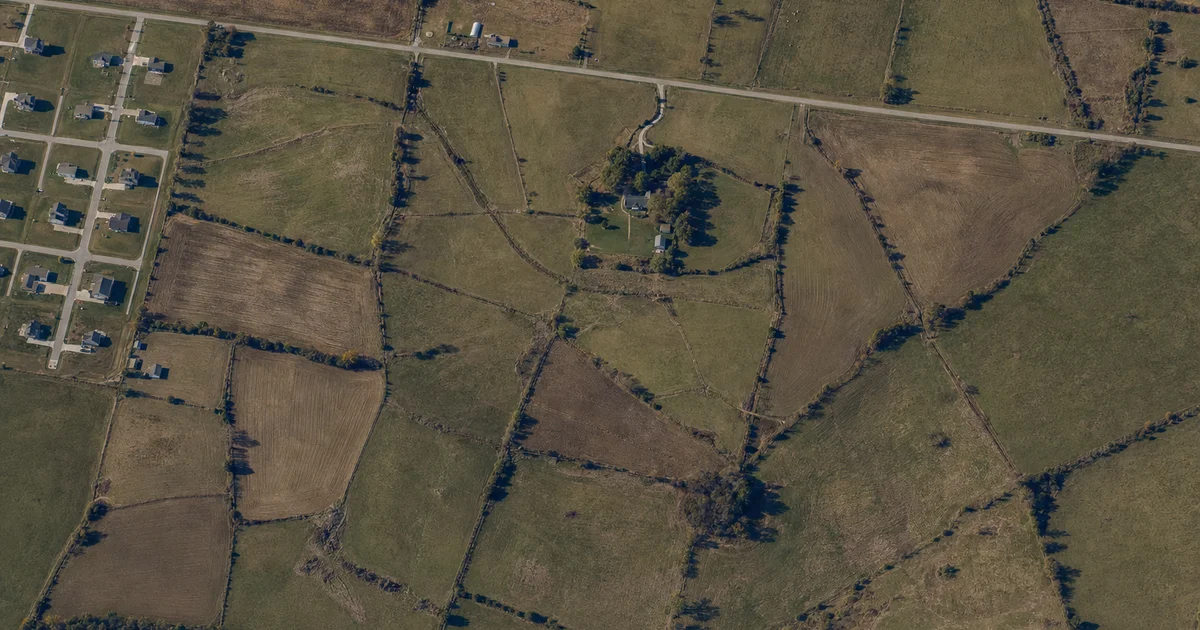
A buyer closes on a parcel. It has a tax lot number, and the deed is recorded in the seller’s name.
Then the buyer applies for a permit, and the county asks a question nobody raised before closing: can you show this lot was lawfully created?
The buyer assumed a tax lot number and a deed added up to a buildable lot. They don’t. Sometimes the county’s question leads to a long dig through old deeds. Sometimes it leads to no house at all.
A legal lot of record is a piece of land created in line with the land division rules in force that day, or before any such rules existed. Land division rules are the local rules on when and how land can be split. Verification is the local government’s determination that a lot meets that test. A tax lot number or a deed alone does not prove it.
Places use different names for these closely related ideas. You may hear legal lot of record, lot of record, lawfully established unit of land, legal lot determination, or certificate of compliance. Ask the local planning office which term it uses. That is the term that opens the right door.
A tax lot number is a billing unit, not proof
A tax lot or assessor’s parcel number is an area drawn on a map so the county can collect property tax. By itself, it says nothing about whether the land was lawfully divided.
San Diego County, California, says so in its own notice to buyers. Its notice on assessor’s parcels states that a separate parcel number does not mean the lot is legal. It adds that one legal lot may be made up of several assessor’s parcels. And a single deed that describes land as two or more lots, without dividing them as to ownership, does not create separate legal lots.
Oregon writes the same idea into state law. Under ORS 92.010(3)(b), a “lawfully established unit of land” does not mean a unit of land created solely to establish a separate tax account.
A deed doesn’t settle it either. A deed can describe land by its boundary lines and distances. That is called a metes and bounds description. In Texas, state law says dividing a tract that way still counts as a division that can require a plat. A plat is a recorded map showing how land is divided. The rule covers cities and the area just outside them (Texas Local Government Code 212.004). There are exceptions, including some divisions into parts larger than five acres. The point is that the way the paperwork describes the land doesn’t decide whether the division was lawful.
Why the rules change at every border
In the examples below, state law sets the frame and a county or city applies it. So the dates, limits and terms are local. The idea itself is old. In 1928 the U.S. Department of Commerce published a model planning law, A Standard City Planning Enabling Act, with a title on subdivision control. Use the examples here to recognize the question. They are not the rule where you are buying.
When a jurisdiction asks you to prove it
There is no single national trigger. Proof of a legal lot can come up at a permit, at a utility hookup, at a lot split, or in the level of review an application lands in. Here are four places it shows up.
In Washington, state law says no building permit, septic permit or other development permit shall be issued for land divided in violation of the state’s subdivision chapter or local rules (RCW 58.17.210). There are two exceptions. One is when the permitting authority finds the public interest won’t be adversely affected. The other is an innocent purchaser for value without actual notice.
A buyer of illegally divided land can sue the seller for damages or ask to rescind the sale (RCW 58.17.210). That is a lawsuit, not a building permit.
In unincorporated King County, the county’s legal lots page puts the burden of proving a lot was legally established on the person claiming legal lot status.
In Texas, the trigger can be a utility hookup. Inside a city or the area just outside it, a utility may not connect water, sewer, electricity, gas or other service to land without a certificate. The certificate shows the land either needs no plat or has an approved one. The statute has exceptions, including land that was already being served before certain 1987 and 1989 dates (Texas Local Government Code 212.012). Outside its exceptions, no certificate means no hookup.
Arizona shows the lot split. A county that has adopted the review ordinance can approve splits through staff review (ARS 11-831(A)). Those splits involve five or fewer lots, any of which is ten acres or smaller. A split that misses the access or zoning standards must still be approved when the applicant signs an acknowledgment. No building or use permit issues until those standards are met (ARS 11-831(C)). Where a county uses that review, an approved split is not the same thing as a buildable lot.
In North Carolina, building permits may be denied for lots that have been illegally subdivided (G.S. 160D-807).
In our work the question also comes up in everyday situations. A buyer tears down and replaces an old house. Someone builds on rural or farm land. A lot is smaller than today’s minimum. An owner splits off a piece, which some places call a partition. Or an owner moves a property line, which some call a lot line adjustment. Whether it comes up depends on the place.
Why a land buyer should care before closing
A land buyer should care before closing, because after closing the research, the application and the delay all belong to the buyer. If a fix exists, it is an application, a wait and a bill, all on your clock.
The deed won’t answer this. Title work confirms who owns the land and what is recorded against it. Whether the land was lawfully divided is a separate question, so ask your title company directly whether its work speaks to it. When a lot’s history is unclear, we start by asking for a full preliminary title report, with the deed chain behind it.
This is also why legal lot status is the first thing we put to a planning office about a lot. The septic, zoning and utility answers come after it.
The question to ask is short. What written determination do you need to confirm this is a lawfully established lot? Use the office’s own words, and don’t name a process they may not use. Ask while you still have a due diligence period, not after the deed is recorded.
Sometimes the county says a prior building permit on the parcel already settled the question. If so, ask the county to confirm it in writing.
The date the lot was formed decides which rules applied
In the examples here, a lot is judged against the land division rules in force on the day it was created. So the creation date can decide whether the lot is legal today.
Oregon’s statute shows the pattern. A unit of land counts as lawfully established if it was created in compliance with the rules that applied. It also counts if it was created by deed or land sales contract when no subdivision or partition rules applied (ORS 92.010(3)). In that pattern, once a place adopted land division rules, splitting land took approval. A deed split from before that date can still count.
Gunnison County, Colorado, says you need a legal lot before a building, septic or access permit can be issued. The same page says a 1972 Colorado law required counties to regulate the creation of parcels smaller than 35 acres. Since 1972, the county says, such a parcel must have been approved by its Board of County Commissioners to be considered valid. Confirm the exact cutoff date with the county.
California shows how a cutoff can move inside one state. San Diego County’s notice points to February 1, 1972. Nevada County’s FAQ points to March 4, 1972. The dates vary by county, so confirm with the county where the lot sits.
Oregon’s Lane County shows how much one date can matter. Its earliest subdivision ordinance took effect April 7, 1949. A lot created before that date and unchanged since can qualify for the county’s simpler review (Lane Code 13.140). Codes change, so check the current version with the county. The published code pages are dated December 2018.
Proving a date takes paper. Recorded plats, the chain of deeds, assessor history, permit history and the construction date of an older home can all help.
San Diego County’s notice says some properties have to be traced back over 100 years, to when the federal government first gave the land to a private party. We covered what that kind of deed work looks like in The Landlocked Lot That Wasn’t.
In our experience, strong evidence for an old lot is a house built before land division rules existed in that place. The deed chain and the assessment and permit history back it up.
The date can save a deal, too
An old creation date can turn a problem lot into a workable one. A lot that looks too small today can be legal because of when it was created.
On one SiteFacts Report, we first flagged a lot as a likely dealbreaker. It was smaller than current zoning allows. Then we read the county’s code. Under that code, the lot’s status turned on when it was platted, and this one had been platted, or recorded on a map, before the current code took effect. We corrected our own rating. What looked like a dealbreaker was an administrative step, and the county’s process is what confirms it.
That is one lot, not a rule. Whether an older lot is protected depends on the local code, and the planning office is the one that says so.
What a SiteFacts Report does here, and what it doesn’t
A SiteFacts Report flags lot-creation questions and tells you what the jurisdiction will need to see. It does not issue a legal lot determination. Only the jurisdiction makes that call. The Report also doesn’t set pins or confirm dimensions. Setting the lines on the ground is a licensed surveyor’s job, done with a boundary survey.
What the Report gives you is a head start while you can still act. You learn the lot’s history needs attention before closing. Then you can ask the seller for records, ask the county what it needs, or walk away. If you are still screening lots, the Land Feasibility Quiz asks about legal lot status along with the other basics.
A tax lot number tells you who gets the tax bill. A deed tells you who owns what is described in it. Neither tells you the county will let you build.
Find out what the county will need before you close
The Report points out where a lot's creation history needs a closer look and what the jurisdiction will want to see. Legal lot status is the jurisdiction's call.